
THE ULTIMATE GUIDE TO EDWARDIAN JEWELLERY
The Edwardian era, spanning from 1901 to 1910, is often remembered as a time of transition. Marked by the passing of Queen Victoria and the ascension of her son, King Edward VII, it was an age of leisure, luxury, and refinement. The Edwardian period sat between the height of Victorian triumph and the turbulence of the coming Great War, a time when the British Empire was at its peak, and the sun never set on its vast territories. With King Edward VII at the helm, a new era of fashion emerged, one that would shape jewellery design for years to come.
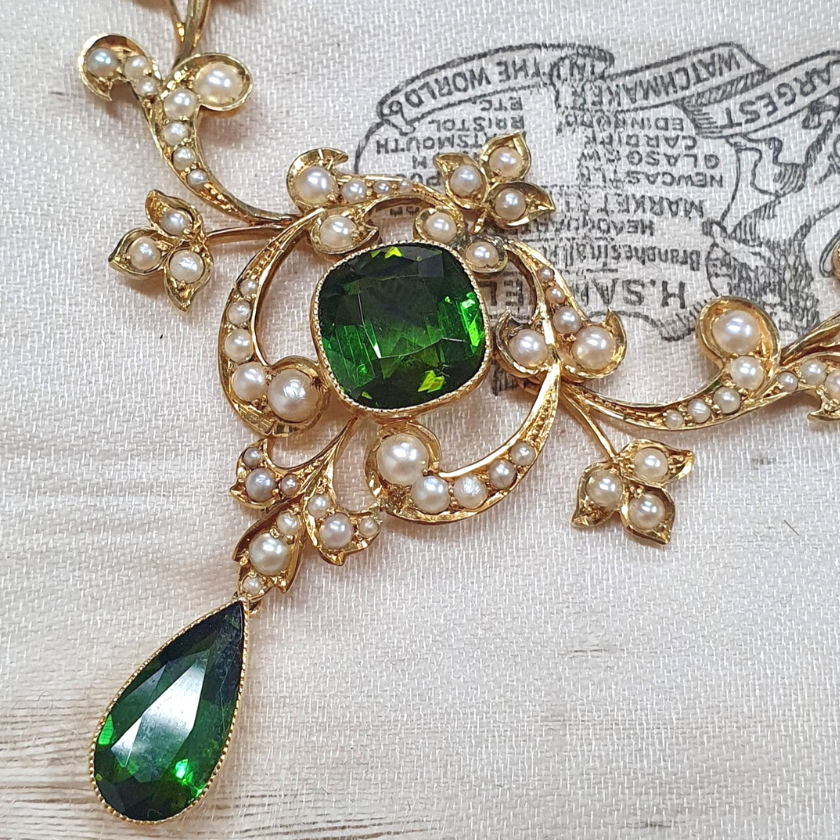
During this period, British high society embraced opulence, and Edwardian jewellery became a reflection of this newly born, fashionable elite. Jewellery design took a dramatic shift, leaving behind the more organic forms of the Art Nouveau and Arts and Crafts movements that had dominated the late 19th century. Instead, Edwardian jewellery was characterised by its elegance, sophistication, and a return to the grandeur of the 18th century, incorporating the most wonderful intricate designs.
A New Fashionable Elite
King Edward VII, fondly known as “Edward the Peacemaker,” was a key figure in the cultural transformation of the early 20th century. His reign brought a wave of fashionable change as he redefined the role of the monarch in influencing society’s tastes, especially in matters of style and jewellery. With the monarch’s love for luxury and fine living, the Edwardian era saw an explosion of extravagant fashion and the rise of elaborate jewellery.
While Queen Victoria’s reign had been characterised by more restrained and sentimental jewellery, Edwardian style marked a shift toward glamour and refinement. It was a period when the British aristocracy and upper classes embraced delicate and sophisticated designs, marking their status through the opulence of their jewellery. It was a time when jewellery wasn’t merely an accessory, but a statement of wealth, power, and refinement.
Design Influence: A Return to the 18th Century
Edwardian jewellery was heavily influenced by the Rococo and Georgian styles of the 18th century. The flowing, feminine designs of this earlier period were revived, offering an elaborate yet graceful aesthetic that became the hallmark of Edwardian jewellery. However, the design flourishes of the past were reimagined with a modern twist, thanks to advancements in engineering techniques that allowed jewellers to create pieces with both finesse and durability.
The use of platinum as a setting material became increasingly popular during the Edwardian period. Platinum, known for its strength, enabled jewellers to create intricate, lace-like filigree designs that could hold diamonds and gemstones securely, while maintaining a delicate and airy feel. This breakthrough in technology allowed for the creation of highly detailed and ornate pieces, which were often set with diamonds, pearls, and coloured gemstones in symmetrical patterns.
Key Features of Edwardian Jewellery
- Intricate Filigree Work: One of the defining characteristics of Edwardian jewellery was the delicate and intricate filigree work. This technique involved creating detailed designs using thin strands of metal, which were often twisted or woven to create lace-like patterns. This delicate workmanship made Edwardian jewellery appear light and airy, despite the often bold use of diamonds and other precious stones.
- Use of Platinum: As mentioned, platinum became the favoured metal for Edwardian jewellers. Platinum’s durability and ability to be moulded into fine, intricate details made it ideal for the highly detailed and intricate designs that were popular during this time.
- Diamonds and Pearls: The Edwardian period was often referred to as the “Age of Diamonds,” and for good reason. Jewellery from this era featured an abundance of diamonds, often in large, brilliant cuts. Diamonds were paired with pearls, which were also highly valued during this time. The combination of diamonds and pearls conveyed a sense of grace and refinement that defined Edwardian style.
- Floral and Lace Motifs: Edwardian jewellery frequently incorporated floral and lace motifs, inspired by the natural world and the Rococo period. Designs often featured delicate flowers, leaves, and scrolls, which were all intricately crafted in platinum or gold. These motifs, paired with diamonds and pearls, created a harmonious and elegant effect.
- Sculptural and Symmetrical Designs: The Edwardian era saw a move toward more structured, symmetrical designs. Many pieces were crafted to resemble the balance and proportion found in classical architecture. Necklaces, brooches, and earrings often had an architectural feel to them, with symmetrical arrangements of diamonds and other precious stones.
Notable Edwardian Jewellery Pieces
- Chokers and Necklaces: Chokers, often set with diamonds and pearls, were popular during the Edwardian period. These necklaces were designed to sit closely around the neck, creating a dramatic yet refined look. Longer, elegant lavalier necklaces with intricate chains were also fashionable during this time.
- Brooches and Pins: Brooches became a favourite accessory in the Edwardian period. They were typically designed with delicate, floral motifs or lace-like filigree, often set with diamonds, pearls, and coloured gemstones. Brooches were worn on lapels, dresses, and hats, adding an extra touch of elegance to any outfit.
- Earrings: Edwardian earrings were often long and dangling, with a focus on movement and light. Many designs incorporated diamonds, pearls, or coloured gemstones, creating a striking and graceful effect.
Edwardian Jewellery’s Influence on Modern Design
Although the Edwardian period lasted for a relatively short time, its influence on jewellery design remains significant. The combination of intricate detailing and the elegance of diamonds and pearls laid the foundation for modern fine jewellery.
Today, vintage and antique Edwardian jewellery remains highly sought after, valued for its timeless beauty and impeccable craftsmanship. Many collectors and jewellery enthusiasts look for original pieces from this era as they seek to own a piece of history, and modern jewellers continue to recreate the delicate, intricate styles of the Edwardian period.
Conclusion
Edwardian jewellery serves as a reminder of an age when fashion and craftsmanship came together to create pieces of unparalleled beauty and lasting impact. Whether worn today or admired in vintage collections, Edwardian jewellery continues to captivate with its timeless charm and intricate elegance.
Click HERE for our full collection of Edwardian jewellery, and sign up to our newsletter to see when new pieces arrive.
Comments are closed here.