
The Ultimate Guide to Victorian Jewellery
Victorian jewellery is more than just adornment; it’s a window into an era rich with emotion, artistry, and symbolism. Spanning Queen Victoria’s reign from 1837 to 1901, this period saw profound social and cultural transformation. The sheer length of her reign meant that tastes and styles evolved significantly, shaped not only by shifting artistic movements, but also by deeply personal events in the monarch’s life. Most notably, the death of Prince Albert in 1861 plunged the Queen into a lifelong mourning period, deeply influencing jewellery trends across the empire.
Cavendish Jewellers celebrates this heritage by curating exquisite antique pieces that echo the timeless beauty and sentimentality of the Victorian era. Whether you’re a collector, an antique enthusiast, or simply someone drawn to meaningful design, you’re sure to find a new treasure in our collection of Victorian jewellery.
A Journey Through the Victorian Eras
Victorian jewellery can be divided into three stylistic periods, each influenced by changing social values, technological advancements, and personal milestones in Queen Victoria’s life:
1. The Romantic Period (1837–1861)
The early years of Victoria’s reign were marked by optimism, youth, and a fascination with nature. Jewellery from this period often featured floral motifs, birds, and symbolic creatures like snakes (which were associated with eternal love). Serpent rings became fashionable after Prince Albert gave one to Victoria as her engagement ring.
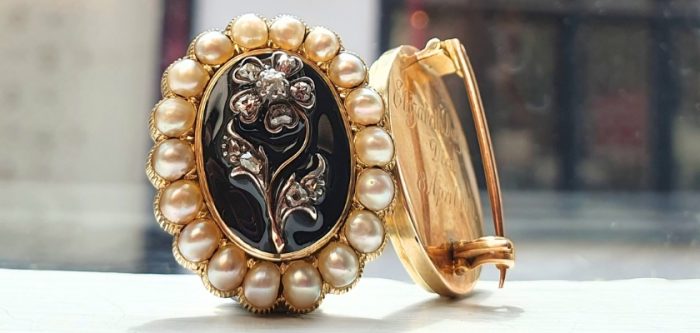
Techniques such as repoussé (hammered relief), cannetille (fine gold wire), and enamel work became popular. Yellow gold was widely used, often in romantic, hand-carved designs. Lockets and brooches were common, many of them containing compartments for miniature portraits or a loved one’s hair.
2. The Grand Period (1861–1885)
The death of Prince Albert in 1861 marked a seismic cultural shift. Queen Victoria entered a prolonged state of mourning, and the rest of the nation followed suit. This era saw a dramatic change in fashion – jewellery became more sombre, substantial, and symbolically rich.
Mourning jewellery rose in popularity, incorporating materials like jet, onyx, black enamel, and even woven hair from the deceased. Designs were deeply emotional, often inscribed with messages of remembrance. Yet this period also marked advances in gem-cutting, allowing more elaborate pieces with diamonds, garnets, and seed pearls.
3. The Aesthetic Period & the Belle Époque (1885–1901)
The final chapter of the Victorian era overlapped with the dawn of the Belle Époque – a time of cultural flourishing and artistic experimentation across Europe. Jewellery began to reflect the more liberated and refined tastes of a changing society, increasingly influenced by the Arts and Crafts and Art Nouveau movements.
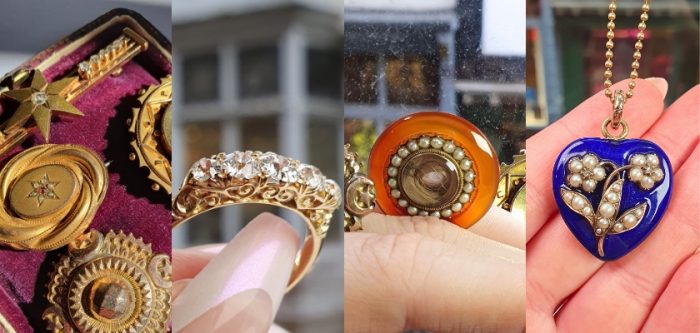
Designs became more whimsical and stylised, featuring delicate motifs like crescent moons, stars, insects, and flowers. Soft curves, openwork gold, enamel detailing, and the use of colourful gemstones and seed pearls defined the look. These pieces signified a lighter, more romantic tone and a shift toward the elegance that would come to define Edwardian jewellery.
Signature Styles & Motifs
Across all three phases, Victorian jewellery is renowned for its storytelling, symbolism, and skilled craftsmanship. Here are a few hallmark characteristics:
- Sentimental Tokens: Lockets, rings, and brooches containing hair, portraits, or messages were common gifts of love or mourning.
- Nature-Inspired Designs: Flora and fauna featured prominently, symbolising purity, love, or protection. Ivy leaves for fidelity, daisies for innocence, and forget-me-nots for remembrance were especially popular.
- Symbolism and Motifs: Snakes, anchors (hope), hearts, hands, and crosses were frequently used to convey deeper meanings.
- Innovative Materials: Human hair, gutta-percha (the Whitby Jet of the Victorian era), jet, and enamel were used, especially in mourning jewellery. Later periods saw more diamonds, opals, and sapphires.
The Enduring Appeal of Victorian Jewellery
Victorian jewellery is a celebration of love, memory, and craftsmanship in an era of tremendous change. Whether you’re drawn to the symbolism of a mourning brooch, the romantic charm of a locket, or the elegance of Aesthetic-era designs, there’s something uniquely captivating about jewellery from this remarkable time.
Cavendish Jewellers invites you to explore our Victorian Collection and find a piece that resonates with your story.
Comments are closed here.