
THE ULTIMATE GUIDE TO GEORGIAN JEWELLERY
When it comes to antique jewellery, few periods boast the same level of historical significance as the Georgian era. Spanning from 1714 to 1837, the Georgian period marked the reigns of the first four British monarchs, George I – George IV. This era, known for its elegance, romanticism, and revolutionary advancements in design, produced some of the most captivating and enduring pieces of jewellery in history.
In this ultimate guide, we’ll dive into the distinctive features of Georgian jewellery, its materials, and why it continues to captivate collectors today.
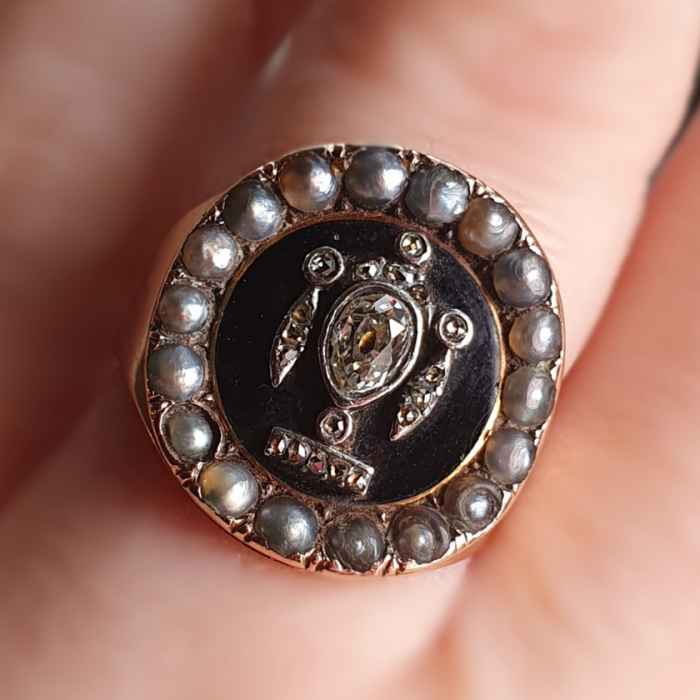
A Glimpse into the Georgian Era
The Georgian era was a time of great social and political change, as well as a period of exploration, scientific advancement, and cultural blossoming.
Unlike the opulent styles of the later Victorian era, Georgian jewellery often embraced a sense of subtlety, elegance, and understated luxury. The designs were inspired by nature, classical art, and romantic ideals, with motifs such as flowers, hearts, ribbons, and scrollwork often seen in the pieces of the period.
Key Characteristics of Georgian Jewellery
- Intricate Craftsmanship: Georgian jewellery is synonymous with meticulous handcrafting. Each piece was created by skilled artisans using techniques such as hand engraving, chasing, and repoussé, which involved hammering and shaping the metal to create intricate textures and designs. This attention to detail ensured that every piece was unique and told its own story.
- Use of Natural Stones: The period predates the advent of modern technology and synthetic materials, so jewellers relied heavily on natural stones. Diamonds, garnets, topaz, and turquoise were commonly used, but gemstones such as emeralds, amethysts, and sapphires were also popular. One notable feature of Georgian jewellery is the use of foiled-back stones, which gave the gemstones a greater brilliance and luminosity when viewed from the front. The foiling enhanced the stone’s reflective quality, creating a mesmerizing effect in the light.
- Unique Settings & Designs: Georgian jewellers often used a technique known as “closed-back settings“, where the gemstones were set in a way that concealed the back of the stone. This made the jewellery more secure and prevented dirt from accumulating around the stone.
- The Influence of Romanticism: Jewellery of this era was heavily influenced by the Romantic movement, which emphasised emotions, nature, and individualism. Pieces often featured motifs inspired by nature, such as flowers, leaves, and birds, as well as symbolic elements like hearts and love knots. These symbols reflected the sentiments of love and passion that were central to the Romantic era.
- Neoclassical & Gothic Revival: Two major design movements influenced Georgian jewellery; Neoclassicism and Gothic Revival. The Neoclassical style, which was inspired by ancient Greek and Roman art, was characterized by clean lines, geometric shapes, and classical motifs. On the other hand, the Gothic Revival style drew on the medieval period, featuring intricate designs with pointed arches and scrolls, emphasised by enamelwork.
Popular Styles of Georgian Jewellery
- Rings: Rings during the Georgian era were particularly significant, with engagement rings becoming increasingly popular. The use of gemstones, such as rose-cut diamonds, garnets, and sapphires, was common, and many rings featured elaborate settings with intricate detailing. The classic “lover’s eye” rings, which depicted a miniature painting of an eye, were also popular during this time, symbolising love and devotion.
- Brooches & Pins: Brooches were versatile pieces of jewellery that could be worn as a statement piece or to hold a scarf or shawl in place. Georgian brooches often featured elaborate designs with floral motifs, ribbons, and symbols of love.
- Necklaces & Pendants Necklaces of this period often featured long chains adorned with pendants, medallions, or cameos. Cameos were particularly popular and often depicted mythological figures, portraits, or scenes from classical history. These intricate carvings in gemstones like agate or coral were highly prized and showcased the artisan’s skill.
- Earrings: Georgian earrings ranged from simple studs to long, dangling designs. A hallmark of the period was the use of “girandole earrings“, which featured multiple stones hanging in a symmetrical pattern. These earrings were often set with diamonds or coloured gemstones and were designed to catch the light and sparkle.
Materials Used in Georgian Jewellery
Georgian jewellery was made from a variety of materials, many of which were carefully selected for their beauty and rarity.
- Gold & Silver: Both gold and silver were commonly used in Georgian jewellery, with gold being the more prestigious option. However, silver was often preferred for its ability to highlight the brilliance of gemstones.
- Diamonds: While diamonds were not as widely available as they are today, they were highly coveted during the Georgian era. The “rose cut” diamond, a flat-bottomed diamond with a domed, faceted top, was popular during this time and was often used in jewellery.
Why Georgian Jewellery Still Captivates Collectors
Despite the passage of centuries, Georgian jewellery remains highly sought after by collectors and jewellery enthusiasts for several reasons:
- Rarity: As the Georgian period was over 180 years ago, authentic pieces from this era are becoming increasingly rare. This rarity makes Georgian jewellery a valuable commodity for collectors.
- Historical Significance: Each piece of Georgian jewellery tells a story, whether it’s about the person who wore it, the events it witnessed, or the artistry of the jeweller who created it. Wearing a piece of Georgian jewellery is like holding a piece of history in your hands.
- Unmatched Craftsmanship: The handcrafting techniques used to create Georgian jewellery are unparalleled in modern times. The level of detail, patience, and artistry involved in each piece is a testament to the skill of the craftsmen of the era.
Conclusion
Georgian jewellery offers a glimpse into a world of romance, refinement, and craftsmanship that continues to captivate those with an eye for beauty and history. Whether you’re a collector, a jewellery enthusiast, or simply someone who appreciates the elegance of antique pieces, Georgian jewellery is sure to enchant you with its timeless appeal. The combination of rare gemstones, intricate designs, and historical significance makes it a cherished part of jewellery history that will continue to shine brightly for generations to come.
Click HERE to view our collection of Georgian jewellery, and sign up to our newsletter to see when new pieces arrive.
Comments are closed here.