
A GUIDE TO DIAMOND SHAPES & CUTS
Choosing the Perfect Diamond Cut
For those of you thinking about popping the question, first of all, congratulations! It’s natural to feel a little overwhelmed by the process of choosing something as special as an engagement ring – between all the different shapes, sizes, styles, and settings, where do you even begin?
One of the most important (and fun) parts of engagement ring shopping is learning about diamond cuts, especially if you’re drawn to antique rings and want a piece of history wrapped around your finger. The cut of a diamond not only determines its overall shape, but also how it catches the light, sparkles in different environments, and complements the wearer’s personal style. To make things easier, we’ve put together a quick guide to diamond cuts through the eras, each one with its own character, charm, and story to tell.

The Old Mine Cut: Born in the Glow of Candlelight
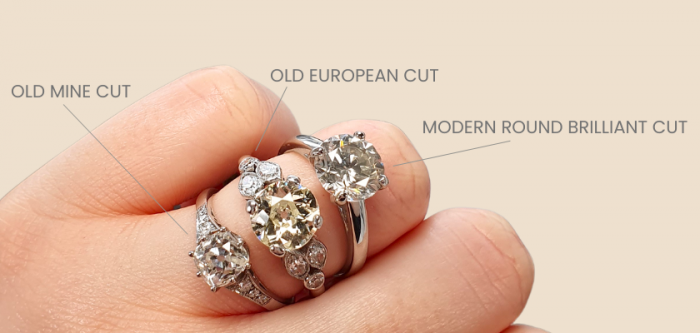
Step back in time to the 17th-century Baroque era, when diamonds weren’t judged by their symmetry or scientific precision, but by how they flickered under soft, romantic candlelight. Enter the Old Mine Cut: the great-grandparent of today’s cushion cut diamonds.
These diamonds are beautifully chunky, with a distinct cushion shape, high crowns, and open culets (the tiny facet at the very bottom of the diamond). Each one was hand-cut by craftsmen who prioritised light-play over perfect symmetry, resulting in stones full of personality and history. Their large facets create what jewellers call fire, the rainbow-colored flashes of light that dance across the surface. If you’re after a truly antique look that whispers timeless romance, an Old Mine Cut diamond might just be your perfect match.
The Old European Cut: Designed for Gaslight Glamour
As technology progressed, so did diamond cutting. From around 1890 to the 1930s, the Old European Cut emerged, reflecting the transition from candlelight to gas lamps and early electric lights. These diamonds have a more rounded shape compared to their Old Mine predecessors, with smaller tables (the flat top facet) and a deeper pavilion (the base).
Thanks to advances like the mechanical bruting machine and improved saws, cutters were able to achieve better symmetry and maximize carat weight. The result? A diamond that still glows with vintage warmth, but with added brilliance. If you love Art Deco or Edwardian styles, the Old European Cut is a gorgeous nod to early 20th-century glamour.
The Modern Round Brilliant: Precision-Cut Sparkle
Fast-forward to the 1950s and beyond, and we see the rise of the Modern Round Brilliant Cut, the most popular diamond shape today. With 58 precisely angled facets, this cut is the product of decades of research and technological advancement. Sophisticated computer analysis and modelling allows cutters to fine-tune every angle to maximize the diamond’s optical performance.
What does that mean for you? This cut delivers unmatched sparkle, combining fire (rainbow flashes), brilliance (white flashes), and scintillation (the play of light across facets as the diamond moves). It’s the go-to for those who want maximum dazzle in all kinds of lighting, from sunlight to selfies.
Beyond the Round Cut: Exploring Modern and Vintage-Inspired Alternatives
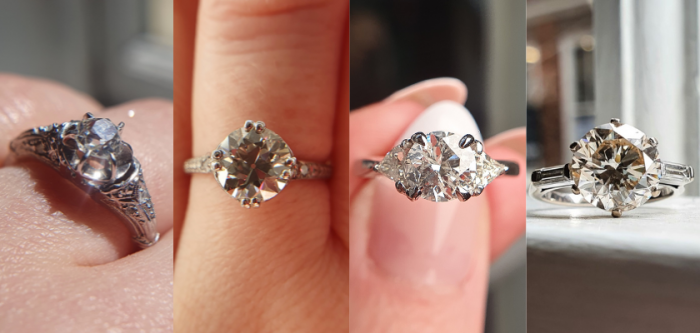
While the Round Brilliant Cut diamond remains the classic choice, there’s a whole world of stunning modern alternatives, each offering its own unique shape, sparkle, and personality. Whether you’re leaning towards clean lines or romantic curves, these popular diamond cuts might just steal your heart:
- Princess Cut: Perfect for modern romantics, this square-shaped diamond is known for its sharp, geometric lines and exceptional brilliance. Thanks to its pyramid-like facets, the Princess Cut delivers a ton of sparkle, ideal for those who love a contemporary look with a bit of an edge.
- Cushion Cut: With softly rounded corners and a pillow-like shape, the Cushion Cut is a timeless blend of old and new. It offers a romantic, vintage feel (reminiscent of the Old Mine Cut) but with the added sparkle and precision of modern cutting techniques.
- Emerald Cut: This sleek, rectangular cut features long, elegant facets and a ‘hall of mirrors’ effect that gives the Emerald Cut a cool, understated glow. While it doesn’t sparkle in the traditional sense, it has a sophisticated clarity and depth that make it a favourite for those who love vintage glamour and minimalist aesthetics.
- Asscher Cut: Similar in style to the Emerald Cut but octagonal in shape, the Asscher Cut has a distinctive Art Deco flair. Its step-cut facets and high crown give it a clean, architectural look with dramatic flashes of light, a great pick for those drawn to antique style with a bold twist.
- Pear Cut: Combining the best of both worlds, the Pear Cut features a rounded end that tapers into a point, creating a graceful, teardrop shape. It’s flattering on the hand as lengthens the finger and is known for its elegant sparkle and unique silhouette.

So, Which Cut Is Right for You?
Ultimately, choosing a diamond cut is about more than just sparkle, it’s about style, story, and sentiment. Do you love the idea of wearing a piece of history? An Old Mine or Old European cut offers vintage charm with centuries of romance behind it. Or do you dream of something with modern brilliance and head-turning shimmer? Our advice? Take your time exploring, consider how each cut looks in different lighting, and most importantly, choose the one that makes your heart skip a beat. After all, your engagement ring should shine as brightly as the love it represents.
Tap HERE to view our engagement ring edit, or contact us for assistance in helping you find the perfect ring.
Comments are closed here.